I have watched the Indian stock market rise to dizzying heights and plunge into terrifying depths. I have seen fortunes made almost overnight, and life savings wiped out just as quickly. Over four decades, markets have weathered scams, speculative bubbles, financial meltdowns, pandemics and wars. Each crisis seemed unprecedented. Each threatened to change the world forever. Yet, somehow, the markets survived.
Consider the early 1990s. India was opening its economy, optimism was running high, and stock prices were soaring. Then came the Harshad Mehta securities scam of 1992, exposing massive manipulation of the banking and stock markets. The spectacular boom gave way to a devastating crash, shattering investor confidence and destroying fortunes.
Barely a decade later came the dot-com frenzy. They said the internet was going to change everything, and investors poured money into technology companies, often with little regard for profits or even revenues. When the bubble burst in 2000, technology stocks collapsed across the world, taking countless investors down with them.
Then came 2008. What began as a crisis in America's housing market spread through the global financial system. The collapse of Lehman Brothers, one of Wall Street's most powerful investment banks, sent shock waves across continents. Credit markets froze, banks teetered on the brink of failure, and stock markets went into free fall. India was thousands of miles from Wall Street, but its markets were caught in the storm.
Then a decade later, we saw a repeat of those turbulent times, when the world was brought to a standstill by COVID-19 in 2020. Factories shut, aircraft were grounded, businesses closed and millions were confined to their homes. Stock markets crashed as fear swept across the globe. India's benchmark indices lost roughly a third of their value in a matter of weeks. Yet, in one of the most extraordinary recoveries in market history, stocks rebounded and went on to scale new highs.
The upheavals did not end there. Russia's invasion of Ukraine in 2022 sent oil, gas and food prices soaring, fuelled inflation and rattled financial markets worldwide. Central banks raised interest rates aggressively to contain inflation, adding another layer of uncertainty for investors.
Different decades. Different disasters. The same recurring story of fear, greed, panic and recovery.
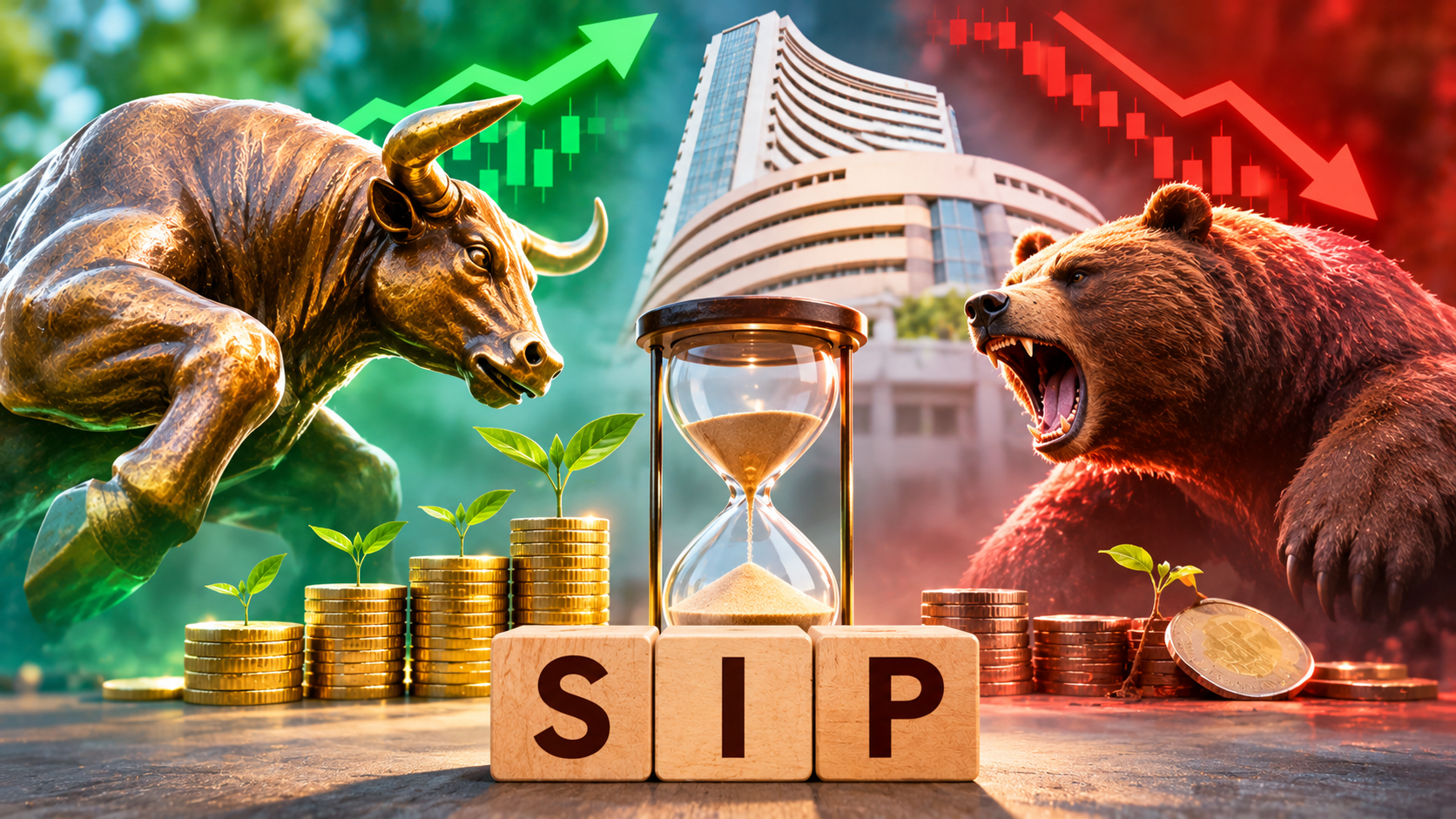
And that brings me to the most important lesson I have learnt from watching markets over the years: the market has seasons, just like nature.
Booms give way to busts, and busts eventually give way to recoveries. The trouble is that nobody can tell you exactly when the seasons will change.
Each time, the mood of the moment felt permanent. In a bull market, everyone around you is certain that prices will only rise. In a bear market, everyone is equally certain the world is ending. Both certainties have been wrong every single time. That is the first thing an ordinary investor must understand: markets move in cycles, the way weather moves in seasons. Summer always follows winter, and winter always follows summer. Nobody can tell you the exact date.
The danger of a bull market is not the market itself. It is what it does to our heads. When your neighbour tells you he doubled his money in six months, patience starts to feel like stupidity. People who have never bought a share in their lives suddenly put their savings in, often borrowing to do it, usually just as prices peak. I have seen tea-shop conversations turn into stock tips in every boom since the eighties; and it has always been a sign that the season was about to change.
So in a bull market, my advice is simple: enjoy it, but with humility. Keep investing your regular amount every month — no more. Do not borrow to invest. Do not put in money you will need in the next five years, for a daughter's wedding or a house deposit. And do not confuse a rising tide with your own swimming skill. In a boom, everybody looks like a genius.
A bear market tests the opposite muscle. When your Rs 1 lakh has become Rs 70,000 on paper, every instinct screams at you to sell and save what remains. But think about what a falling market actually is: the same businesses i.e the banks, the cement makers, the soap companies whose products you buy every day, available at a discount. We rejoice when onions get cheaper. Yet when good companies get cheaper, we panic. In a bear market, the ordinary investor's best friends are boredom and routine: keep your monthly investment going, buy quietly, and let time do the heavy lifting.
The investors I have seen lose the most money over the decades were not unlucky. They did the same two things, in the same order: they bought with excitement near the top, and sold in fear near the bottom. Doing nothing would have made them money. Their emotions made them poor.
The investors who built real wealth were often unremarkable people — a schoolteacher here, a small businessman there — who invested a fixed sum month after month, through good seasons and bad, for twenty or thirty years. They did not predict a single cycle. They simply refused to let any cycle change their behaviour.
So do not ask whether this is a bull market or a bear market. By the time anyone knows for sure, it is already changing. Ask instead: am I investing money I can leave untouched for years, regularly, in a disciplined way? If the answer is yes, the season outside matters far less than you think. The farmer does not stop sowing because the sky looks uncertain. He dresses for the weather, and he keeps working his field.