Every time you unlock your smartphone with facial recognition, navigate an unfamiliar city using satellite navigation, or take a medicine developed through years of research, you are benefiting from technologies rooted in deep-tech breakthroughs. Behind these everyday conveniences lie decades of research, billions of dollars in investment and countless failed experiments.
The US has long turned scientific breakthroughs into businesses through research, universities and venture capital, while China has invested heavily in semiconductors, electric vehicles, batteries, robotics and AI to emerge as a formidable technological rival.
Despite its engineering talent, India remains better known for IT services and software startups than globally competitive technology companies, unlike the US, which produced Nvidia and SpaceX, or China, which built giants such as BYD and CATL.
That may now be changing.
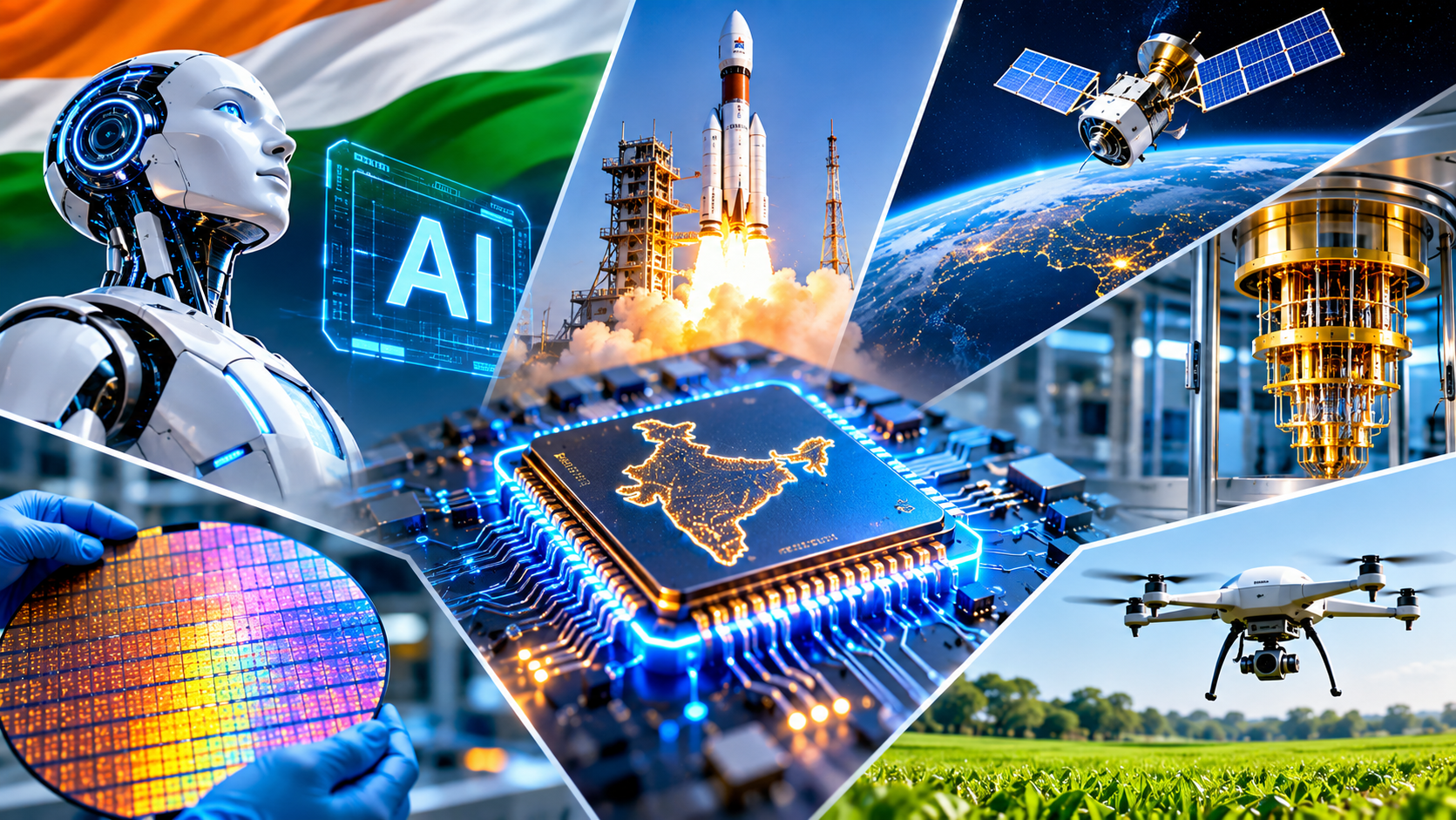
Deep tech is suddenly the hottest bet in India, with venture-capital funds scrambling to get in on the action and the government rolling out big-ticket funding schemes.
But why now? To understand this, let us break it down a bit.
A startup is a company where the recipe for success is not yet known. Founders stumble around in the dark, trying to figure out something new; it could be a business model, a product or a technology. They build, test, fail, learn and iterate. The faster they discover what works, the better their chances of success.
Now enter deep-tech. If a startup ventures into this terrain, it adds another layer of uncertainty. Because you’re not just figuring out whether a business works; they may first have to establish whether the technology works at all. And this journey may need to be funded for close to a decade without meaningful revenue.
A biotech company may spend years testing a new drug, a space startup may need multiple rocket launches, and a semiconductor company may take years to develop a viable product. Even then, substantial capital is needed for regulatory approvals, manufacturing and scaling.
This is where India’s venture-capital ecosystem struggled. Few investors had the expertise to assess scientific progress without revenues, leaving founders hearing: “Come back when you have traction.” But how do you show traction when you need funding just to prove the technology works?
The government recognised this gap and began building a flywheel across five pillars:
1. Education: Learning to question the textbook
Growing up, we were taught that there is always a right answer and it’s in the back of the textbook. I remember an engineering laboratory test where the equipment was not working properly. When my reading differed from the expected answer, my professor essentially told me to write the textbook answer or else I would fail the test. That is no way to develop cutting-edge technology.
Deep tech requires people who investigate unexpected results rather than simply reproduce established knowledge. Recognising this, the government introduced programmes such as the Department of Science and Technology’s FIST scheme, which supports higher-education institutions with research infrastructure and equipment. The goal is to produce engineers and scientists who can question the textbook itself.
2. Infrastructure: Making expensive lab equipment accessible
A researcher may have a promising idea but lack the expensive equipment needed to test it. Biotech requires specialised laboratories, while semiconductor and robotics startups need sophisticated testing and development facilities. No single company or founder can afford all the equipment needed to validate a concept.
This is where shared infrastructure comes in, allowing multiple startups to access equipment they could never afford individually. C-CAMP in Bengaluru, for instance, supports life-sciences innovators with specialised facilities. The government has introduced several such initiatives across sectors, including semiconductors, defence and AI.
3. Commercialisation: Finding the first customer
A working prototype is not yet a business; startups need customers willing to test their products in real-world conditions, but established buyers are often reluctant to purchase from companies without a track record.
The government stepped in to break this cycle through programmes such as Innovations for Defence Excellence (iDEX), which supports startups developing technologies for the armed forces, with funding released against milestones. Government procurement platforms also provide eligible startups with routes to public-sector customers.
4. Venture capital: Funding the long journey
Once the initial orders are won, the next challenge is scaling up, which requires venture-capital (VC) funding from investors aligned with the country's strategic goals. To meet this need, the central government has set aside ₹10,000 crore for the Startup India Fund of Funds 2.0, which will invest in venture-capital funds that, in turn, invest in startups.
5. Manufacturing: Scaling beyond the prototype
Finally, even after proving the technology and finding customers, startups must be able to manufacture reliably and competitively. This requires an established supply chain for raw materials, factories, suppliers, skilled workers and substantial capital.
To help companies scale, the government is developing industry-focused clusters that bring manufacturers, suppliers and supporting infrastructure together. India’s semiconductor programme illustrates this ambition: by 2026, 12 semiconductor projects had been approved, involving proposed investments exceeding ₹1.64 lakh crore. The same principle applies to batteries, aerospace, robotics and advanced materials.
India is beginning to connect the dots: better research infrastructure, shared laboratories, early customers, patient capital and manufacturing ecosystems.
From Lab to Launchpad: Building a deep-tech power house
The opportunity is not simply to build more startups. It is to build companies that develop technologies the world needs and manufacture them at scale. US and China have a strong head start over us as they’ve sustained investment in cutting-edge technologies over many years.
But in India we’ve now started laying the groundwork. And given we do have an engineering talent core it’s possible we could leverage that into a platform for learning, access to labs, investment, orders and supply chains.
I believe India’s deep-tech moment has truly arrived.