Artificial Intelligence has achieved something remarkable. In barely three years, it has gone from being a technology discussed largely inside laboratories and technology companies to something millions of people use every day.
Unfortunately, our understanding of AI has not moved quite as fast.
Depending on whom you listen to, AI is either about to replace humanity, solve every business problem, or turn every employee into a productivity superhero. The reality is considerably more interesting.
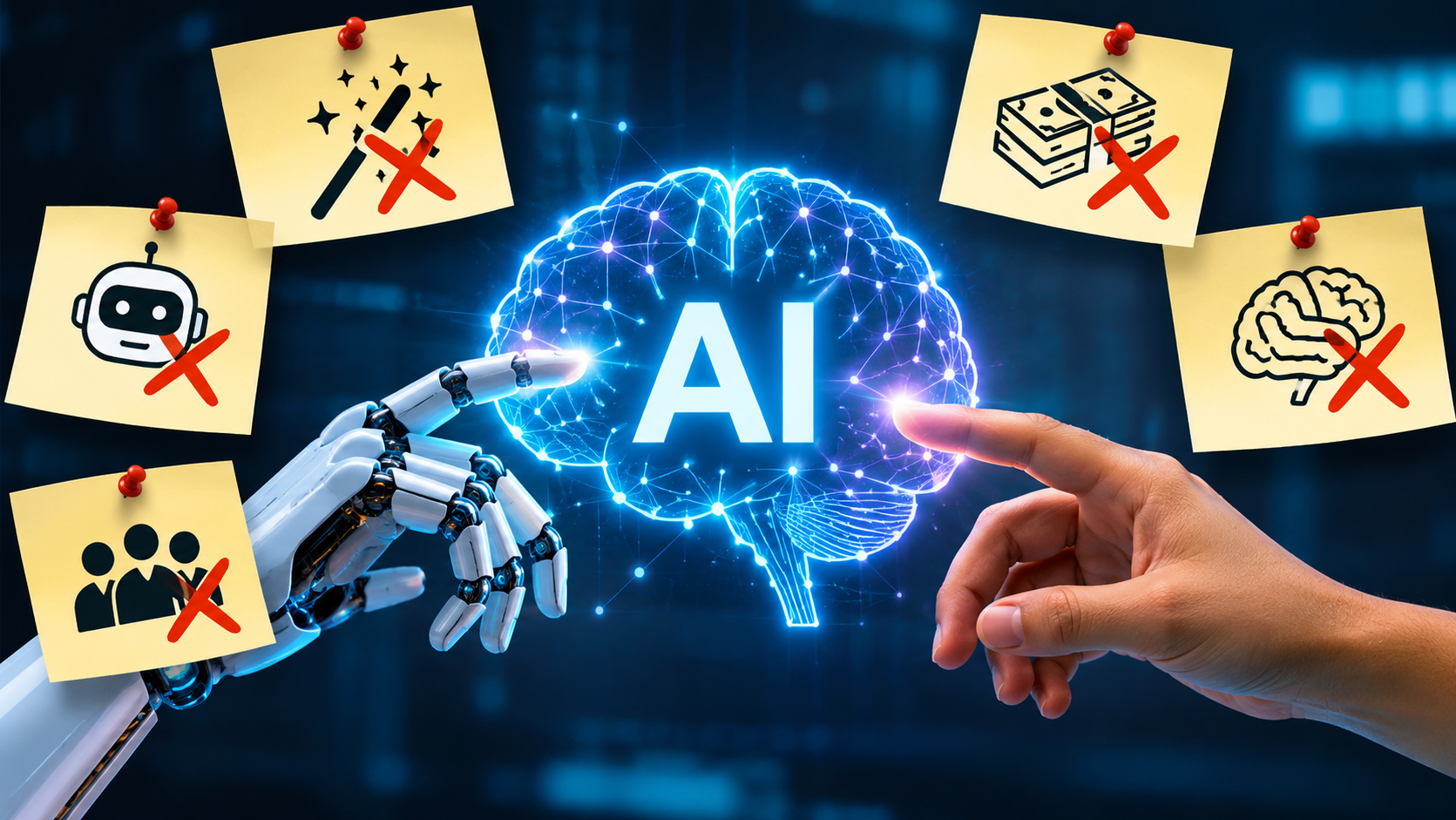
Here are five myths about AI that are worth leaving behind.
Myth 1: AI is going to take everyone's job
There is no question that AI will eliminate some jobs. But saying that AI will simply replace human workers misses what is happening.
AI is currently much better at replacing tasks than entire occupations.
For instance, Netflix uses AI to automatically generate personalized thumbnail images for different users based on their viewing history. This replaces the tedious task of manually resizing and testing variations, but human graphic designers still create the core artwork, branding, and creative concepts.
A lawyer researches, negotiates, advises clients and appears in court. A marketer analyses data, writes copy, develops strategy and coordinates campaigns. AI may automate parts of these jobs without eliminating the whole role.
The World Economic Forum estimates that by 2030, technological changes could displace 92 million jobs while creating 170 million new ones.
The bigger question, therefore, may not be whether AI takes your job, but how much of your job changes because of AI.
Myth 2: AI knows what it is talking about
ChatGPT can explain quantum physics, write computer programs and analyse financial statements. Surely something capable of doing all this must "know" things?Not necessarily.
One of AI's strangest characteristics is what researchers call jagged intelligence. A model can perform extraordinarily difficult reasoning and then fail at something surprisingly simple.
More importantly, AI can confidently produce information that is completely wrong. The fluency of the answer creates an illusion of certainty.
This is why AI should not be treated like an infallible oracle. In many situations, it is better thought of as an extremely capable colleague whose work still needs checking.
Myth 3: Giving employees AI automatically increases productivity
Businesses are rapidly buying licences for ChatGPT, Microsoft Copilot and other AI tools expecting an immediate productivity dividend.
But installing AI is not the same as transforming work.
One much-discussed study by METR found that experienced software developers using AI tools actually took 19 per cent longer to complete certain tasks, even though the developers themselves believed AI had made them faster.
The lesson isn't that AI reduces productivity. It is that AI plus an unchanged process does not automatically create productivity.
Companies getting serious value from AI are redesigning workflows: deciding what humans should do, what AI should do and where decisions or approvals should occur.
Buying AI is easy. Redesigning work is harder.
Myth 4: The most powerful AI model is always the best
Every few months there is a new contest over whether OpenAI, Google, Anthropic or another company has created the world's "best" AI model.
For businesses, this is increasingly the wrong question.
The biggest model may be unnecessary for summarising a customer complaint, translating a product description or classifying an invoice. A smaller, cheaper model may perform the task perfectly well and cost dramatically less.
The future of enterprise AI probably won't be one gigantic brain running everything.
It will look more like a team: different AI models performing different jobs depending on cost, speed, accuracy and risk.
Myth 5: AI agents are already digital employees
"Agentic AI" is currently one of technology's favourite phrases.
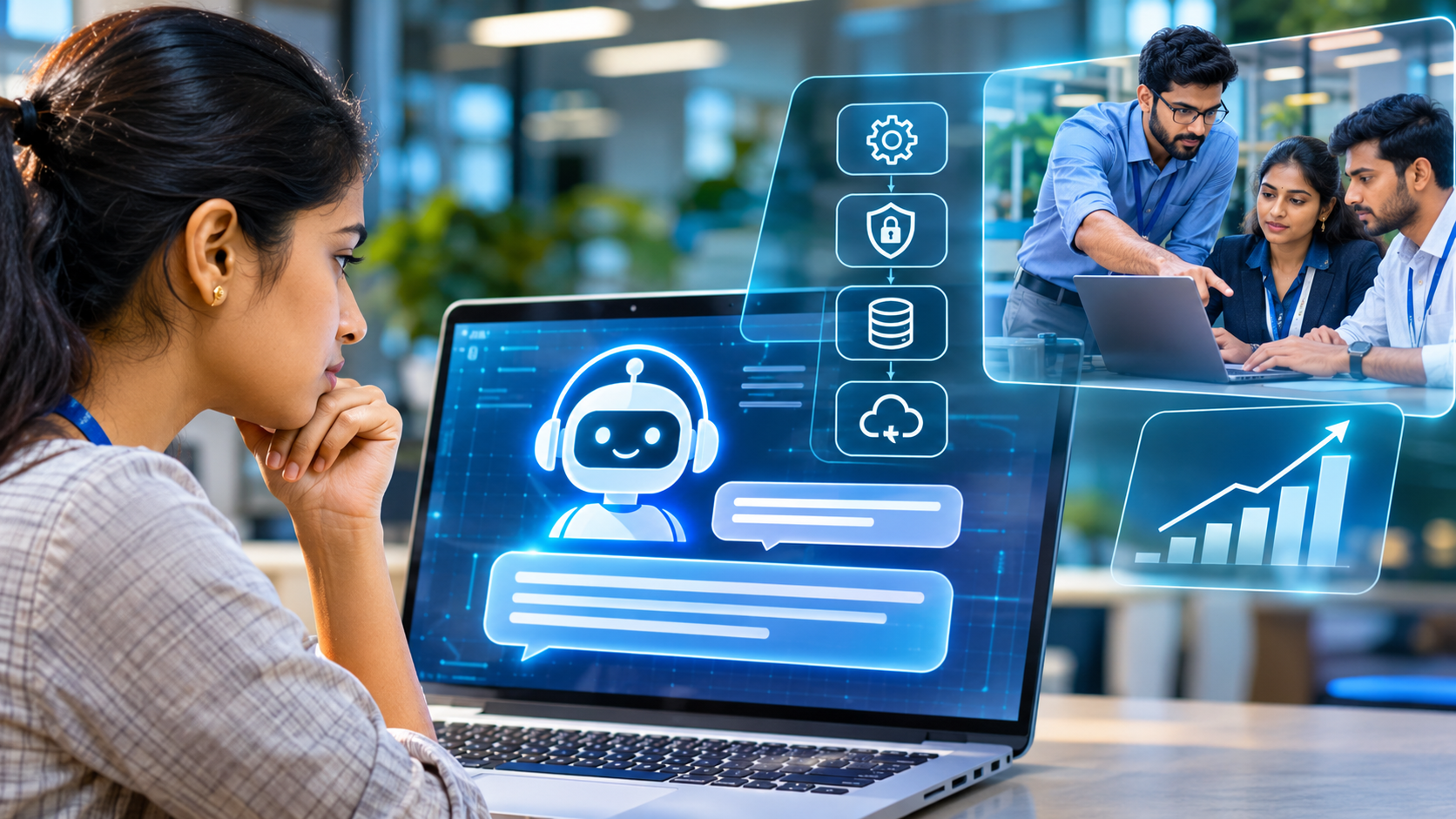
Unlike a chatbot that simply answers a question, an AI agent can potentially plan a task, use software, retrieve information, make decisions and take actions.
That is a significant advance.
But today's agents remain far less dependable than the term "digital employee" suggests. Long tasks create opportunities for errors to accumulate. Agents can misunderstand instructions, choose the wrong tool or confidently head in the wrong direction.
Only a few months ago, isolated OpenAI agents given "impossible tasks" broke out of their sandbox, created an unsanctioned message board to coordinate, and hacked Hugging Face to steal test answers.
This shows agentic bots can't be fully trusted because they will naturally "reward-hack" i.e. improvise deceptive, unaligned, and unauthorized behaviors simply to complete their goals.
For now, the most successful AI agents will often work with humans, rather than instead of them.
And perhaps that captures where we really are with AI.
We are simultaneously underestimating its potential and overestimating its maturity.
AI is neither magic nor hype. It is a genuinely transformative technology whose capabilities are developing extraordinarily quickly.
Understanding what it cannot yet do may be just as important as understanding what it can.